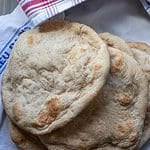
Taboon - Palestinian Flatbread
Taboon is a leavened Palestinian Flatbread baked in a clay oven called Taboon (or tannur) and traditionally served with Musakhan.
Servings: 6 pieces
Calories: 312kcal
Equipment
- 1 kitchen scale
- 1 measuring spoons
- 1 Dough cutter
- 1 oven mitts
Ingredients
- 2 ⅓ cups bread flour (strong white flour) (300 grams/10½ oz)
- 1 ⅔ cups strong wholemeal flour (200 grams/7 oz)
- 2 ¼ teaspoon fast action dried yeast
- ¾ teaspoon salt
- 1 ⅓ cups water
- 1 ½ tablespoon olive oil
- 1 teaspoon sugar
Instructions
Making the Dough
- Add the water, sugar, and yeast to a large bowl, and stir.
- Leave it for 10 minutes until it forms bubbles then add the salt, olive oil, and flour.
- Mix until forming a soft and sticky dough. Depending on the type of flour or the humidity of the room, you might need less flour than the recipe calls for.
- Turn the dough on a lightly floured surface and knead it until smooth but slightly sticking to your hands. Add a little bit of extra flour if it's too sticky.
- Cover the dough with a clean kitchen cloth and let it rise in a warm place for about 1 hour or until it has doubled the size.
Shaping the Taboon Bread
- Gather some pebbles, and wash them thoroughly with water and dish soap. Dry them using a cloth and place them on a baking dish.
- Preheat the oven to 220° C (430° F).
- While the oven is heating, place the baking dish/tray with pebbles in oven. If not using pebbles, line the baking dish with silicon paper to avoid the dough sticking.
- Divide the dough into 6 equal pieces, sprinkle some flour on top of the dough balls and cover with a clean kitchen cloth.
- Leave them to rest for another 15 minutes on a lightly floured surface.
- Working with one piece of dough at a time, set dough on a floured work surface.
- Dust the dough ball with more flour, then flatten and stretch it gently with your hands until you have a roughly 20 cm (8") Ø circle.
Baking the Taboon Bread
- When the pebbles are really hot, carefully transfer dough circle directly over the pebbles. Carefully stretch it out to form a more circular shape if necessary.
- If not using pebbles, simply place the dough on a heated baking paper lined tray and use your fingers to make dimples all over the bread .
- Bake the bread until golden, for about 5 minutes. Flip it using oven mitts and bake for another 2 minutes.
- Remove the Taboon bread from the oven and place it on a plate lined with clean kitchen cloth.
- Cover the flatbread with another clean cloth to keep warm and proceed to stretch another dough ball while the pebbles are reheating.
- Repeat the process until all the dough balls are baked.
Video
Notes
- The rising times might vary depending on the type of yeast you are using and the temperature of the room.
- Make sure the temperature of the water is about 40° C (105° F) for best results.
- Leave the dough balls to rest for another 15 minutes on a lightly floured surface. This step is necessary to be able to stretch and shape the dough balls much easier.
- Wrap the baked taboon bread in clean kitchen cloths as soon as they come out of the oven. That would keep them warm and also help to soften them while you are baking the rest.
- You can keep these delicious flatbreads at room temperature for up to 2 days when tightly wrapped with a cling film.
Nutrition
Calories: 312kcal | Carbohydrates: 58g | Protein: 9g | Fat: 5g | Saturated Fat: 1g | Polyunsaturated Fat: 1g | Monounsaturated Fat: 3g | Sodium: 118mg | Potassium: 166mg | Fiber: 5g | Sugar: 1g | Vitamin A: 1IU | Vitamin C: 0.003mg | Calcium: 16mg | Iron: 1mg